
"Corvus Coffee"
230 article(s) found

Description of the flavor, taste and aroma characteristics of boutique coffee beans in the Equatorial country of Ecuador Coffee Hassanda Manor
In 1978, the Galapagos Islands were declared a World Heritage site by the United Nations Educational, Scientific and Cultural Organization. The archipelago is called a living museum of biological evolution and a melting pot of marine life, and Darwin's theory of evolution was inspired by the Galapagos Islands. Most countries in the world produce only one kind of coffee beans, while Ecuador is one of the few countries in the world that can produce Arabica coffee beans at the same time.

Flavor description characteristics of moderate mellow Hasunda Coffee Garden in Ecuador introduction to the taste of fine coffee beans
The minerals are mainly oil, mainly distributed in Guayaquil Bay, and oil fields are also found in the Amazon Plain. Gold and silver are distributed in Machaki and Saluma and other places. Copper is made in Machaki. There are sulfur mines in the Cologne Islands. In addition, there is iron, lead and so on. The forest area accounts for about 68% of the country's area, mostly in the eastern region, rich in valuable wood, such as mahogany and ointment.

Introduction to the flavor characteristics of the manor producing area of Ecuador's boutique coffee beans
Port Guayaquil is the largest seaport in Ecuador. It faces the Pacific Ocean and backs against Mount Santa Ana. The nearby island of Pune serves as a natural barrier to protect the harbour from storms. There is a wharf in the south, which is more than 900 meters long. Ships from different parts of the world flying various flags are moored in the harbor. The port railway leads to the capital Quito, and highways connect Quito with other cities in the country.

Aromatic and aromatic Ecuadorian fine coffee beans Flavor Taste Aroma Description Introduction
It wasn't until the early 1990s that the Gonzalez family bought Hassenda Coffee Plantation. Local microclimates, intense equatorial sunlight and rapid temperature changes (43 ° C at sea level and 10 ° C to 16 ° C at 275 m above sea level) caused by the Humboldt Current provided unique favorable conditions for the Gonzalez family to expand.
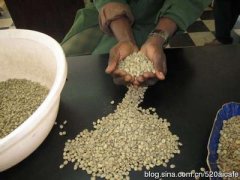
A brief introduction to the taste of high-quality coffee beans in the flavor description of the moderately mellow Hassanda coffee garden in Ecuador
As early as the 18th century, Chinese clothing, textiles and other goods were shipped to Ecuadorian cities through Guayaquil. In August 1978, the Chinese cargo ship Jialing Jiang arrived here for the first time. Most of the import and export goods of the two countries are transported through Guayaquil, mainly oil, mainly distributed in the Guayaquil Bay, and oil fields are also found in the Amazon plain. Gold and silver are distributed in

Introduction to the Flavor and Taste of Coffee Manor in Ecuador
Ecuador has a presidential system. On 26 November 2006, Correa, a candidate of the Sovereign Motherland Movement, was elected president in the second round of presidential elections and took office on 15 January 2007. Immediately after taking office, Coe promoted the convening of the Constituent Assembly. On April 15, 2007, Eritrea decided to hold a Constituent Assembly in a referendum with an approval rate of 81.72%. In September, Eritrea held the election of representatives to the Constituent Assembly, the leader of the ruling party.

Introduction to the flavor description of high-quality coffee beans in Ecuador coffee roasting area
The best Ecuadorian coffee is grown on St. Cristobal Island in the Galapagos Islands, which has the unique natural geographical conditions for giving birth to the best quality coffee in the world. A cup of Galapagos coffee, like the beautiful scenery of the Galapagos Islands, is sure to impress you. In the mid-15th century, fishermen fishing in the western Pacific Ocean of South America were in the middle stream.

Moderate and mellow Hassanda Coffee Manor in Ecuador the cultivation of boutique coffee beans is located in geography.
Between Colombia and Peru, Ecuador, which passes through the equator, is one of the few countries in South America that produces both Arabica and robastian coffee. In fact, Ecuador means the Spanish equator. Due to the use of old-fashioned traditional harvesting and handling methods, Ecuadorian coffee is not listed as a boutique coffee, so it is generally rarely seen.

Ecuadorian coffee beans from South American boutique coffee producing area
Coffee origin: the Ecuadorian Arabian Coffee Tree was first introduced to Ecuador (Ecuador) in 1952 and its coffee quality is very good, especially the coffee harvested in early June. Ecuadorian coffee beans can be divided into two varieties: Galapagos and Gigante, both of which have the characteristics of large granules and heavy weight. Ecuadorian coffee can be divided into first class (No.1) and special coffee according to quality.

The producing area of boutique coffee Ecuador
Ecuador Coffee Coffee Origin: the Ecuadorian Arabica Coffee Tree was first introduced to Ecuador (Ecuador) in 1952 and its coffee quality is very good, especially the coffee harvested in early June. Ecuadorian coffee beans can be divided into two varieties: Galapagos and Gigante, both of which have the characteristics of large granules and heavy weight. Ecuadorian coffee can be classified according to its quality.

Ecuadorian coffee beans from South America
Coffee origin: the Ecuadorian Arabian Coffee Tree was first introduced to Ecuador (Ecuador) in 1952 and its coffee quality is very good, especially the coffee harvested in early June. Ecuadorian coffee beans can be divided into two varieties: Galapagos and Gigante, both of which have the characteristics of large granules and heavy weight. Ecuadorian coffee can be divided into first class (No.1) and special coffee according to quality.

Characteristics of Ecuadorian coffee beans Ecuadorian coffee manor
The Arabian Coffee Tree was first introduced to Ecuador in 1952 and its coffee is of good quality, especially the coffee harvested in early June. Ecuadorian coffee beans can be divided into two varieties: Galapagos and Gigante, both of which have the characteristics of large granules and heavy weight. Ecuadorian coffee can be divided into first class (No.1) and super excellent (Extra Superior) according to its quality.

Introduction of coffee, coffee and bean producing countries in Ecuador
The Arabian Coffee Tree was first introduced to Ecuador (Ecuador) in 1952 and its coffee is of good quality, especially the coffee harvested in early June. Ecuadorian coffee beans can be divided into two varieties: Galapagos and Gigante, both of which have the characteristics of large granules and heavy weight. Ecuadorian coffee can be divided into first class (No.1) and excellent (Extra Superior) according to its quality.

Introduction to the characteristics of high-quality coffee beans in the producing area of Ecuadorian coffee with balanced acidity
Ecuador is divided into the western coast, the central mountains, the eastern Amazon River basin and the four central regions of the Galapagos Islands, with diverse climatic conditions. The western coastal plain belongs to the tropical rain forest climate, with an average temperature of 23-25 ℃. The central Andes. The intermountain basin in this area belongs to the savanna climate, and the mountain belongs to the subtropical forest climate, with perennial snow above 4000 meters above sea level. Annual average decline

The origin and growing environment of coffee beans in Giant Turtle Island, Ecuador
The Arabian Coffee Tree was first introduced to Ecuador in 1952 and its coffee is of good quality, especially the coffee harvested in early June. Ecuadorian coffee beans can be divided into two varieties: Galapagos and Gigante, both of which have the characteristics of large granules and heavy weight. Ecuadorian coffee can be divided into first class (No.1) and super excellent (Extra Superior) according to its quality. they

Characteristics of Ecuadorian coffee beans price of Ecuadorian coffee beans flavor of Ecuadorian coffee beans
The Arabian Coffee Tree was first introduced to Ecuador in 1952 and its coffee is of good quality, especially the coffee harvested in early June. Ecuadorian coffee beans can be divided into two varieties: Galapagos and Gigante, both of which have the characteristics of large granules and heavy weight. Ecuadorian coffee can be divided into first class (No.1) and super excellent (Extra Superior) according to its quality.

A balanced and refreshing Ecuadorian fine coffee bean. Grindness. Roast degree.
Ecuador also produces coffee locally. Because the Andes pass through from the middle, coupled with sufficient precipitation, suitable temperature and abundant light under the influence of tropical climate, Ecuador's coffee grows very well. Gigante and Galapagos coffee are the best in coffee, although Ecuador grows Arabica coffee locally.

A brief introduction to the unique history and culture of the origin and development of coffee in the Galapagos Islands
In 1875, 340 years after Freitoma de Belanga discovered the island, a native named Kovos came to St. Cristobal, where he established the Hasunda Coffee Garden and planted about 100 hectares of Arabian bourbon coffee trees. Since the plantation is located between 140m and 275m above sea level, the climate is equivalent to that of 915m ~ 1830 m in the interior.